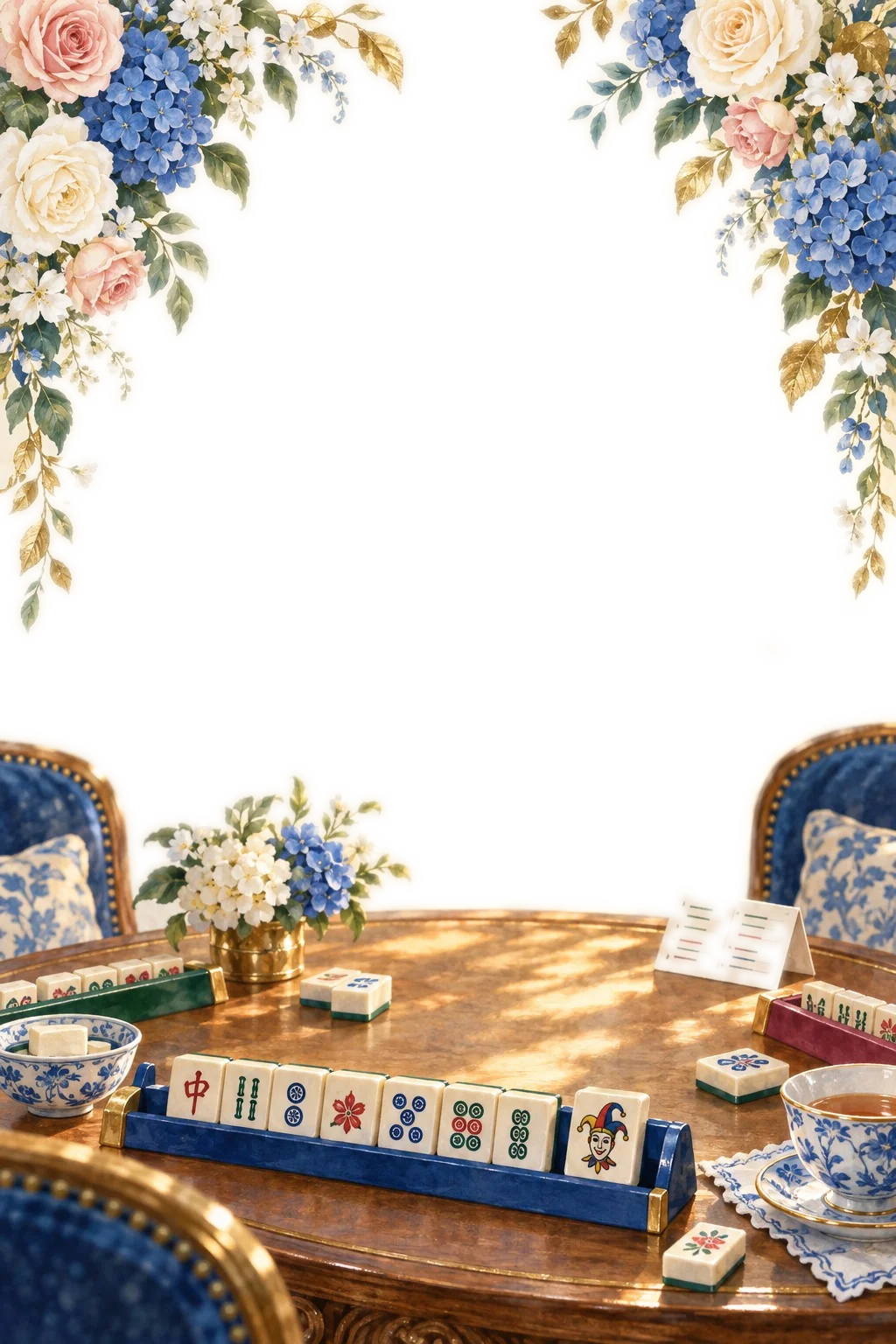
An ornate border of pink and cream roses and blue hydrangeas framing a wooden table set with American Mahjong racks, tiles including a joker, a teacup, and a folded scorecard.

Four Winds Mahjong · American Mahjong

The card that runs the table.

American Mahjong plays like a conversation — the Charleston, the joker, and a card of winning hands that gets reissued every single year. It's the ruleset most American tables already know by feel, even before they know it by name.

The card, the joker, and the rack it all comes from.

Where This Version Comes From

Born in New York, not Shanghai.

Mahjong reached the United States in the 1920s as an import, marketed hard and adapted harder — early American sets and rulebooks bent the game to fit a card-table culture that had never played anything quite like it.

The version played today traces to 1937, when a group of New York players organized the National Mah Jongg League and began publishing an annual card of standard winning hands — still reissued every year since, and still the backbone of how the game is played from coast to coast. Where the Charleston gets its name, and how the League's rules diverged from the game's Chinese roots, is part of what's covered at the table.

A card gets rewritten every single year. The game underneath it hasn't changed in generations.
The Card Itself

One card, reissued every year.

Every hand you can win with is printed on a single card the League reprints annually — combinations retired, others added, categories reshuffled to keep the game from going stale. Learning to read it is its own skill, and it's one that gets taught hands-on, at the table, not off a webpage.

Pull up a chair — Charleston included.

American Mahjong sessions for families, community groups, gaming clubs, and conventions all start with a message.

New to mahjong entirely, not just this ruleset? Start broader at Welcome to the Table.